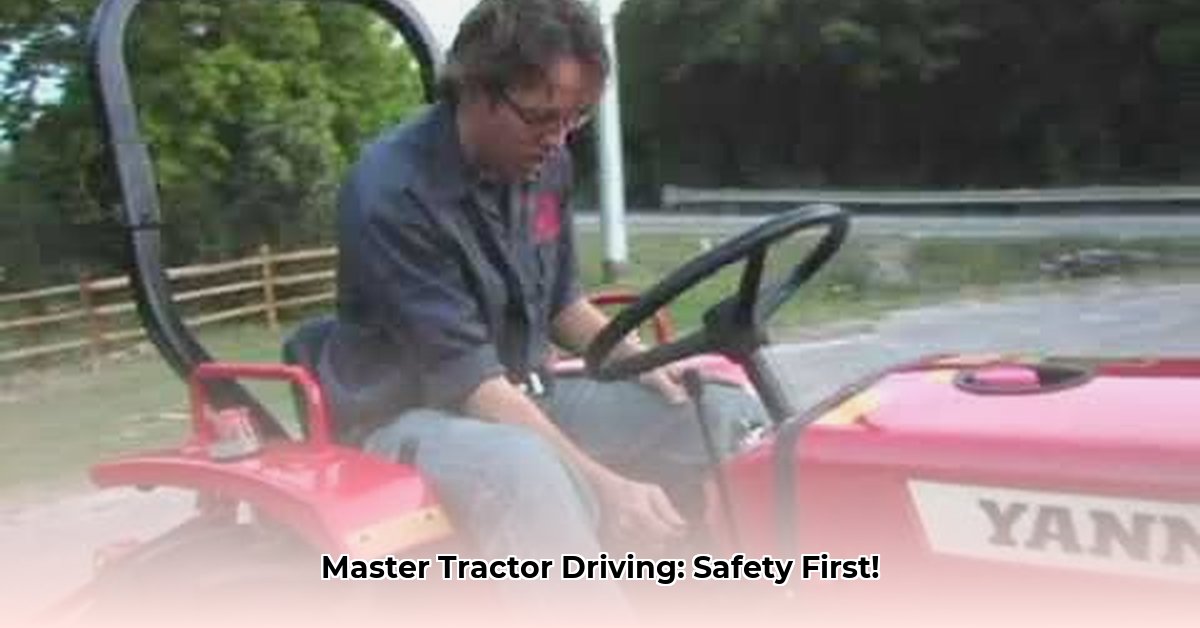
Getting Started: Pre-Operational Checks
Before operating a tractor, a thorough pre-operational check is crucial for safety and to prevent mechanical issues. This involves several key steps:
Tire Inspection: Check tire pressure using a gauge and inspect tread depth. Insufficient pressure or worn treads reduce traction and increase the risk of accidents. (Low tire pressure can lead to slippage and loss of control.)
Fluid Levels: Verify engine oil, transmission fluid, coolant, and hydraulic fluid levels. Top off as needed. (Low fluid levels can cause overheating, mechanical failure, or hydraulic system malfunctions.)
Bolt Check: Visually inspect the tractor and all attached implements for loose or missing bolts. (A missing bolt could lead to equipment failure and potential injury.)
Implement Examination: Carefully examine any attached implements (e.g., plow, mower) for damage or loose parts. (Damaged implements can cause malfunctions and accidents.)
Safety Equipment Check: Ensure the Roll Over Protective Structure (ROPS) is securely in place and the seatbelt is functional. (ROPS and seatbelts are crucial safety features that minimize injury risk.)
For more precise guidance, check out this helpful resource on GPS guidance.
Starting and Operating Your Tractor: A Step-by-Step Guide
Starting and operating a tractor requires a systematic approach, prioritizing safety at every stage.
Seatbelt: Always fasten your seatbelt before starting the tractor. (This is non-negotiable for your safety.)
Ignition/Choke: Turn on the ignition and engage the choke if necessary (consult your tractor's manual). (The choke assists cold-weather starts.)
Engine Start: Start the engine according to the manufacturer's instructions. If the engine struggles, don't force it—check fuel levels and other potential problems. (Repeated attempts to start a faulty engine can cause damage.)
Gear Selection: Slowly engage the clutch and select the appropriate gear. Start in low gear, especially on unfamiliar terrain. (Low gear provides better control, particularly on slopes or uneven surfaces.)
Steering and Acceleration: Steer gently and gradually increase speed. Adapt your speed to the terrain. (Sudden movements or excessive speed can lead to loss of control.)
Implement Engagement: If using implements, engage them carefully following the manufacturer's instructions. (Improper engagement can cause damage to the equipment or result in accidents.)
Monitoring Gauges: Regularly check engine temperature, hydraulic pressure, and other gauges to prevent overheating or malfunctions. (Monitoring gauges allows for early detection of potential problems.)
Understanding Your Tractor's Controls
Familiarizing yourself with your tractor's controls is paramount for safe and efficient operation.
Clutch: Engages and disengages power to the wheels and implements. Smooth clutch operation is key for preventing jerking and damage. (Rough clutch work can lead to mechanical stress and potential damage.)
Gear Shift Lever: Selects the forward or reverse gear and speed. (Improper gear selection can cause stalling or loss of control.)
Brake Pedal: Used to stop the tractor. Many tractors have separate brakes for each rear wheel, providing enhanced control. (Effective braking is critical for preventing accidents.)
Throttle: Controls engine speed and power output. Adjust throttle to match the workload. (Inappropriate throttle settings can lead to overheating or reduced efficiency.)
Hydraulic Controls: Operate implements such as loaders and backhoes. (Incorrect use of hydraulic controls can damage equipment or cause injury.)
Power Take-Off (PTO): Transmits power to rear implements. Engage and disengage the PTO only when appropriate. (The PTO shaft is a significant hazard if not engaged or disengaged properly.)
Safe Tractor Operation: Essential Tips and Best Practices
Beyond the mechanics of driving, safe tractor operation requires awareness and adherence to several key principles:
Visibility: Maintain awareness of your surroundings and drive slowly in conditions with reduced visibility. (Limited visibility increases the risk of collisions and accidents.)
Terrain Awareness: Adjust speed based on terrain conditions. Steep slopes or uneven ground require reduced speed and extra caution. (Inappropriate speed on uneven terrain can lead to rollovers or loss of control.)
Obstacles: Be mindful of overhead power lines, ditches, and other potential hazards. (Collisions with obstacles can lead to serious damage or injury.)
Proper Attire: Wear sturdy footwear, long pants, and eye protection. (Appropriate clothing reduces risk of injury from moving parts or debris.)
No Passengers: Never carry passengers on the tractor. (Passengers significantly increase the risk of accidents and injuries.)
Regular Maintenance: Regular maintenance is critical for preventing breakdowns and assuring safe operation. Refer to the manufacturer’s recommendations for a maintenance schedule. (Regular maintenance extends equipment life and prevents unexpected failures.)
Shutting Down Safely: Post-Operation Procedures
Proper shutdown procedures are as critical as safe startup.
Slow Down: Gradually reduce speed before stopping. (Sudden stops can cause damage to the tractor or lead to a loss of control.)
Neutral Gear: Shift the tractor into neutral. (Leaving the tractor in gear can result in unintended movement.)
Disengage PTO: Turn off the power take-off (PTO) to prevent accidental engagement. (An engaged PTO is hazardous to the operator.)
Parking Brake: Engage the parking brake. (The parking brake prevents the tractor from rolling.)
Ignition Off: Turn off the ignition. (Turning off the ignition deactivates all power systems.)
Tractor Attachments: Expanding Capabilities, Expanding Caution
Using attachments significantly expands a tractor's capabilities. However, safe operation requires extra caution. Always consult your manufacturer’s manuals for specific instructions and safety precautions for each type of attachment.
Common Tractor Maintenance: A Quick Reference
Regular maintenance is key to longevity and safety. Below is a helpful summary:
| Task | Frequency | Importance |
|---|---|---|
| Check fluid levels | Daily | Prevents engine damage and operational failure |
| Inspect tires | Daily/Weekly | Ensures proper traction and prevents punctures |
| Check for loose bolts | Weekly | Prevents parts from falling off, causing damage |
| Service air filters | Monthly/as needed | Maintains engine efficiency and prevents damage |
| Change engine oil | Every 50 hours/as needed | Essential for engine lubrication and longevity |
Remember, safe tractor operation is a combination of knowledge, skill, and a commitment to cautious practices. Your safety and the safety of others should always be your top priority.